C5: Collecting and Translating Public Health Data

The most effective policy and programmatic changes in public health occur where there are champions and leaders committed to population health. Furthermore, because of this commitment to the public’s health, the sector’s leadership can help ensure sustainability of programs and create, champion, and implement policies that impact health.
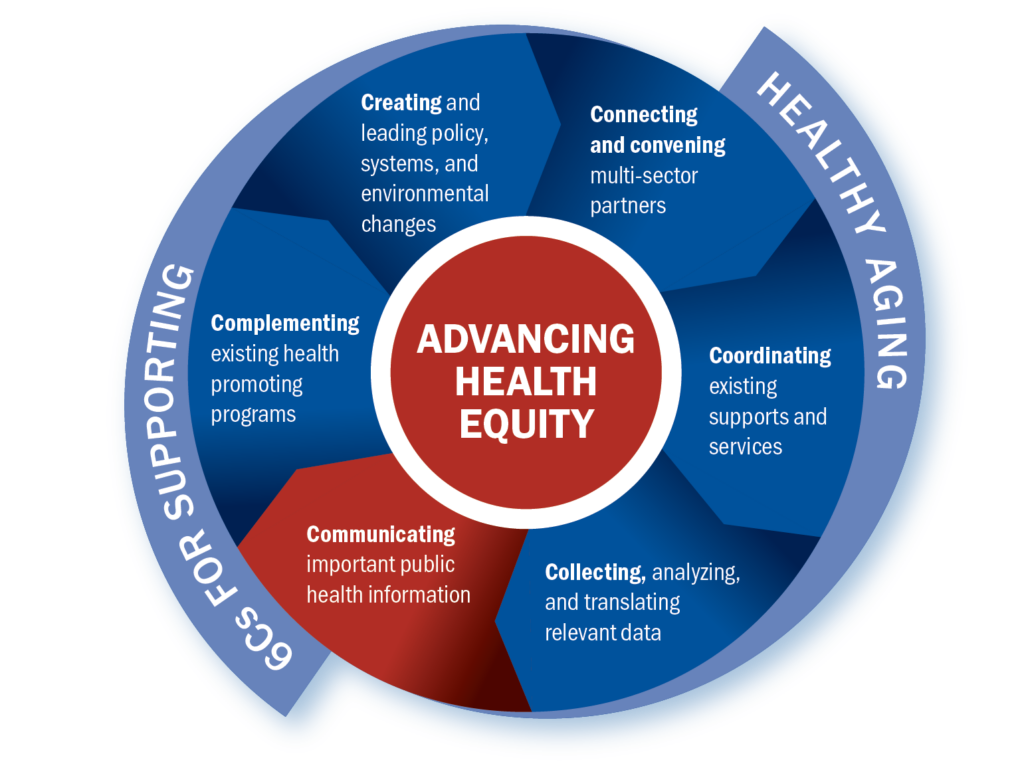
Example of C5: Public health professionals should be well-informed about the risk factors for elder mistreatment to effectively communicate with older adults and their caregivers about available resources and supportive services. The Maryland Department of Health offers a brochure that provides an overview of elder abuse, along with a webpage that links to several related resources.
Alignment with the 10 Essential Public Health Services: Developing and championing elder mistreatment prevention policies, plans, and laws is crucial to support community-dwelling older adults.
Strategies
Examples/Resources
Provide information from the Consumer Financial Protection Bureau to older adults in your jurisdiction to help older adults and caregivers protect against financial exploitation and make informed decisions.
- Consumer Financial Protection Bureau Money Guides
- Consumer Financial Protection Bureau: Preventing elder financial abuse: Guide for nursing homes and assisted living communities
- Consumer Financial Protection Bureau: Preventing elder financial abuse: Guide for family and friends of people living in nursing homes and assisted living communities
Offer public health trainings using the Frameworks Institute elder mistreatment toolkit to apply evidence-based recommendations to messages and conversations about elder mistreatment and related issues, to build public understanding and support.
Share information in rural communities, such as at local farmers markets, to educate people on the risks of elder mistreatment, as many areas lack access to cellular data and other technological resources, making in-person outreach crucial.
Facilitate education and instruction on prevention of elder mistreatment for older adults and caregivers to provide practical knowledge, skills-building opportunities, and resources to manage finances with confidence.
- Money Smart for Adults
- Consumer Financial Protection Bureau: Preventing elder financial abuse Guide for nursing homes and assisted living communities
- Consumer Financial Protection Bureau: Preventing elder financial abuse: Guide for family and friends of people living in nursing homes and assisted living communities
Offer public drop-in hours and community forums to provide a safe space for individuals to ask questions, access resources, and receive information on healthcare delivery and management from hospital or public health workers.

The AFPHS 6Cs Training and Implementation Guide was developed by Trust for America’s Health with funding from The John A. Hartford Foundation and in partnership with the Education Development Center and the National Alliance for Caregiving.