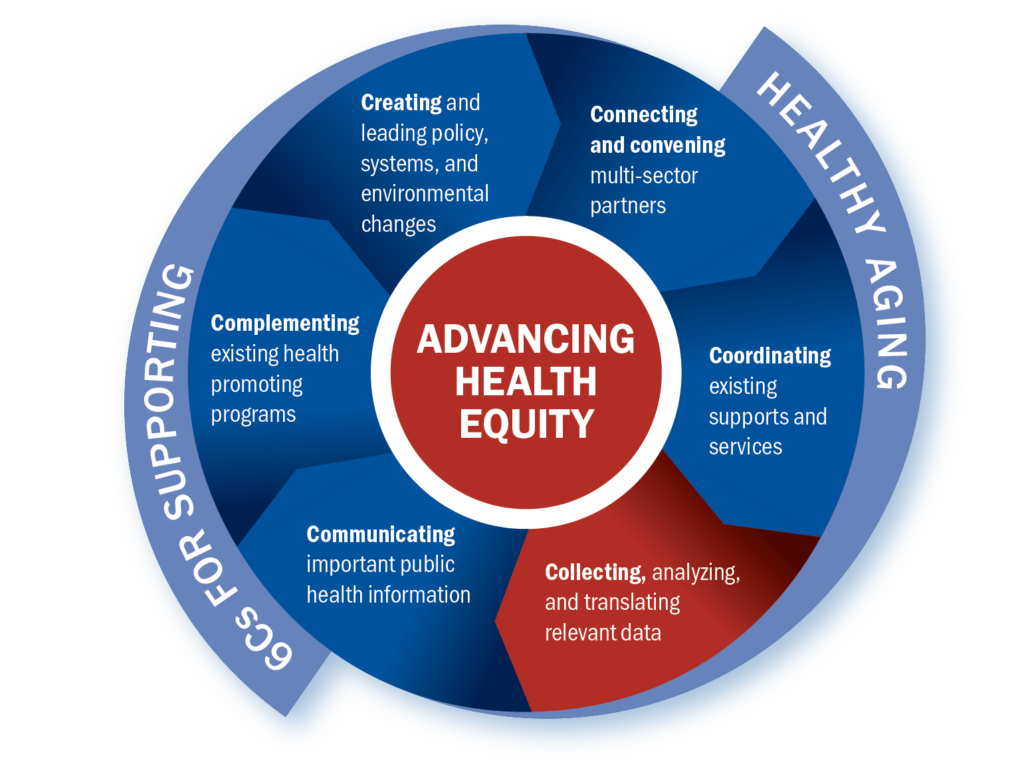
C4: Collecting and Translating Public Health Data

Collecting, analyzing, and translating relevant and robust data on older adults can help identify the needs and assets of a community and inform the development of interventions to improve older adult health. Understanding demographic and health trends, including those that may help to prevent elder mistreatment, is a key public health role.
Example of C4: Accurate and up-to-date data on individuals who have been victims of elder mistreatment is essential for understanding the scope and scale of the issue. Reliable data supports the development of informed, evidence-based interventions that enable public health professionals to effectively prevent and address elder mistreatment. The Mississippi State Department of Health developed data profiles to capture the health status of older adults across the state. One law enforcement official used information on falls and fractures from these profiles to identify areas where an elder abuse prevention program could be implemented.
Alignment with the 10 Essential Public Health Services: Assessing and monitoring population health status, including that of the older adult population, is crucial to addressing all the factors that influence older adult health and well-being, both individually, and in the community.
Strategies
Examples/Resources
Educate internal staff and partners on terminology and key data points related to incidents elder mistreatment.
Use the community health improvement process to collect information on older adults and from older adults to prioritize key health issues and develop interventions to reduce the risk of elder mistreatment. Including older adults in the information gathering process is key to informing effective interventions.
Access and become familiar with data from the National Adult Maltreatment Reporting System and incorporate similar data into your jurisdiction’s collection mechanism.
Utilize mixed methods research on elder mistreatment to tell both quantitative and qualitative stories about elder mistreatment prevention and treatment.
Use data to identify trends in caregiving and use this information to develop and target interventions such as respite services to ensure they are responsive to caregiver needs to prevent elder mistreatment.

The AFPHS 6Cs Training and Implementation Guide was developed by Trust for America’s Health with funding from The John A. Hartford Foundation and in partnership with the Education Development Center and the National Alliance for Caregiving.