C3: Coordinating Existing Supports and Services

Public health practitioners can identify programs, practices, and services that could be considered for expansion and inclusion into a broader system of support for older adults, including elder mistreatment prevention and support. Effectively addressing elder mistreatment requires coordinated efforts across multiple services and organizations. Leveraging existing programs, teams, and resources allows public health practitioners to create comprehensive and sustainable approaches to prevention and intervention.
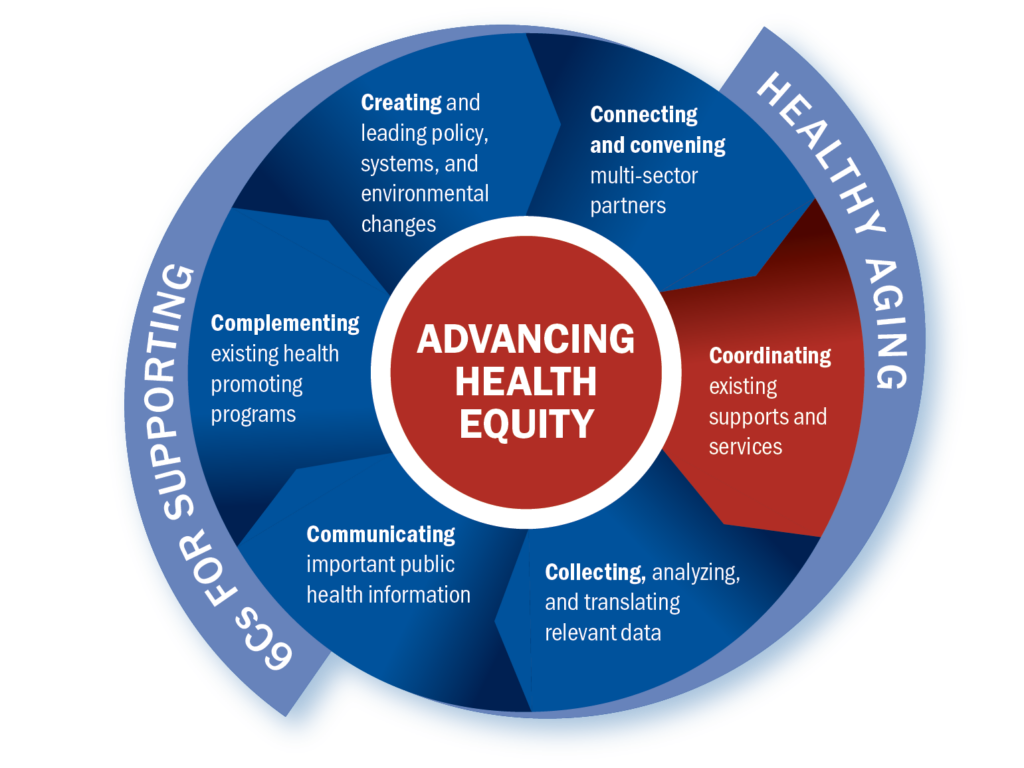
Example of C3: The Elder Justice Coordinating Partnership of Maine assembled private sector and public sector experts representing a wide array of disciplines to develop an Elder Justice Roadmap to address Maine’s response to and prevention of elder abuse in all its forms.
Alignment with the 10 Essential Public Health Services: Building and maintaining a strong organizational infrastructure for public health necessarily includes support for vulnerable populations, including older adults who may have a greater risk for elder mistreatment.
Strategies
Examples/Resources
Integrate elder abuse screening and response into clinical settings, when possible, including collaboration with outpatient settings, adult protective services and other community organizations.
Create a roadmap to coordinate detection of elder abuse and improve the multidisciplinary response to all forms of abuse.
Work with existing community agencies, including the postal service, emergency response personnel, etc., to expand their programs to incorporate screening programs to train community partners to recognize early warning signs of elder mistreatment.
Coordinate with existing caregiver support programs to ensure wide access to caregiver education and support.
- National Alliance for Caregiving (NAC) Caregiver Resources
- GUIDE Model
- Caregiver Action Network
Embed an adult protective services worker in a health clinic to help detect elder mistreatment and streamline reporting and communication.
Incorporate elder mistreatment prevention education into existing community-based outreach and training programs, e.g., health education or lifestyle management programs provided in partnership with senior centers, physical activity centers, and the Y.
Coordinate with local pharmacists as they are mandated reporters who regularly interact with older adults, allowing them to identify signs of elder mistreatment through medication management and frequent contact.
Train funeral directors to detect potential elder mistreatment as they frequently interact with bereaved older adults and the public health sector (for death certificates). They may be able to identify individuals who may need assistance and support during this vulnerable time.
Train financial advisors and banking professionals on elder mistreatment prevention.
Train dentists to detect potential elder mistreatment as dental clinics often encounter older adults with unmet oral health needs, allowing for the identification of those requiring additional support or facing mental health issues.
Train long-term care staff on detecting and addressing elder mistreatment.
- Elder Mistreatment Emergency Department Toolkit – GEDC
- Adapt this toolkit for use in nursing homes, assisted living facilities, and other long-term care sites for older adults.
Coordinate with faith based organizations to educate staff and community about elder mistreatment prevention and risk factor identification.

The AFPHS 6Cs Training and Implementation Guide was developed by Trust for America’s Health with funding from The John A. Hartford Foundation and in partnership with the Education Development Center and the National Alliance for Caregiving.