C1: Creating and Leading Change

The most effective policy and programmatic changes in public health occur where there are champions and leaders committed to population health. Furthermore, because of this commitment to the public’s health, the sector’s leadership can help ensure sustainability of programs and create, champion, and implement policies that impact health.
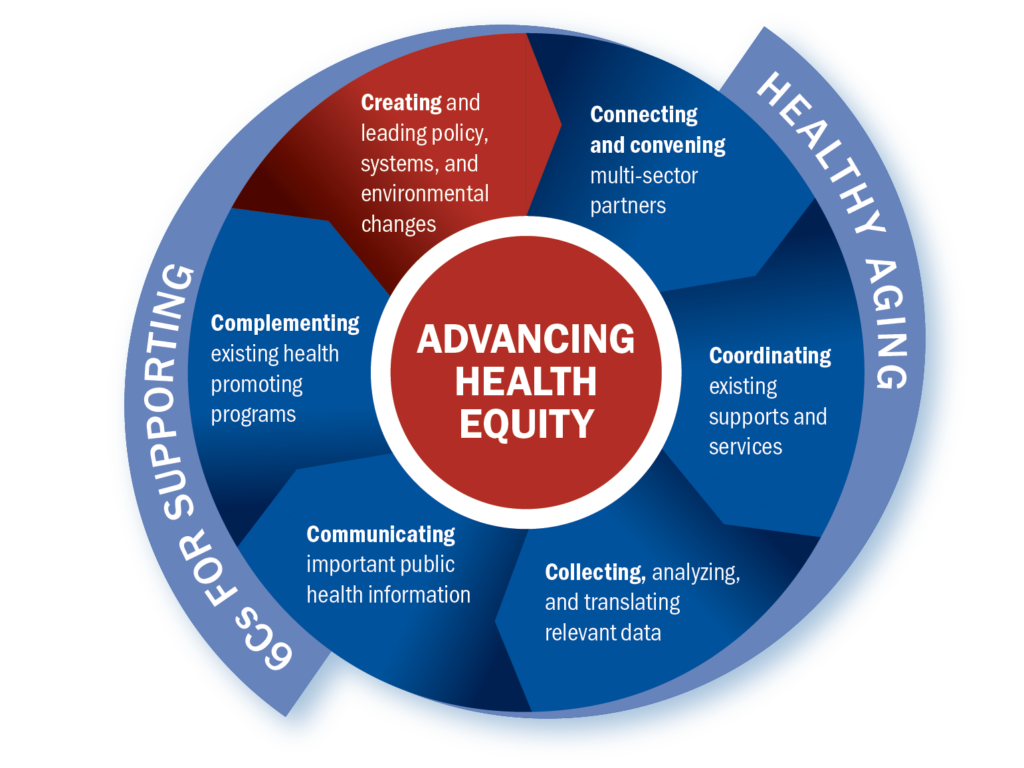
Example of C1: Some states are prioritizing ageism awareness and creating leadership opportunities to reframe the narrative around older adults and the value of age in society. Maine’s Council on Aging sponsors the Leadership Exchange on Ageism, designed to educate business, policy, and community leaders on their roles in ending ageism including elder mistreatment.
Alignment with the 10 Essential Public Health Services: Developing and championing elder mistreatment prevention policies, plans, and laws is crucial to support community-dwelling older adults.
Strategies
Examples/Resources
Ensure that public health agencies and practitioners have the authority and resources to address elder mistreatment, promote interagency collaboration, and incorporate elder mistreatment awareness and prevention into existing aging and health promotion programs.
Identify research needs around EM and work with researchers (universities and other public health-focused organizations) to identify and develop programmatic changes that support elder mistreatment prevention.
Identify other national or state movements that include educational materials that can be disseminated at the local level.
Raise awareness about ageism and how it may increase risk for elder mistreatment and provide education for public health practitioners in your jurisdiction about ageism. Apply positive aging strategies to this work.
Incorporate elder mistreatment education into public health curricula and provider licensure to ensure healthcare professionals are prepared to identify and address abuse, leading to earlier intervention and prevention.
Seek funding from potential community business partners whose key values or customer outcomes align with the goals of elder mistreatment prevention (e.g., Zelle or banks who want to address financial exploitation).
Identify and implement strategies to fund caregiver support and education programs to keep family members at home for as long as possible.

The AFPHS 6Cs Training and Implementation Guide was developed by Trust for America’s Health with funding from The John A. Hartford Foundation and in partnership with the Education Development Center and the National Alliance for Caregiving.